
Back to home
SIGEDIS
Design of a reusable access management framework
Citizens regularly need to share access to their personal government data with an organisation, a family member, or a company. This project delivered the reusable framework that makes this possible: a secure, consistent way to grant and manage access, that integrates into a wide range of online services while meeting strict privacy, security and legal requirements.

Sociale zekerheid
Burgermandaten
My role in the design process
UX research
Mapping the needs of citizens, professionals and organisations through interviews and market research, to define the right solution.
Service design
Defining which applications were needed and how they work together as one coherent framework, for both citizens and professionals.
Customer journey
Mapping the end-to-end journeys for different user groups, to create a simple and consistent experience across multiple online services.


Mockup & UI design
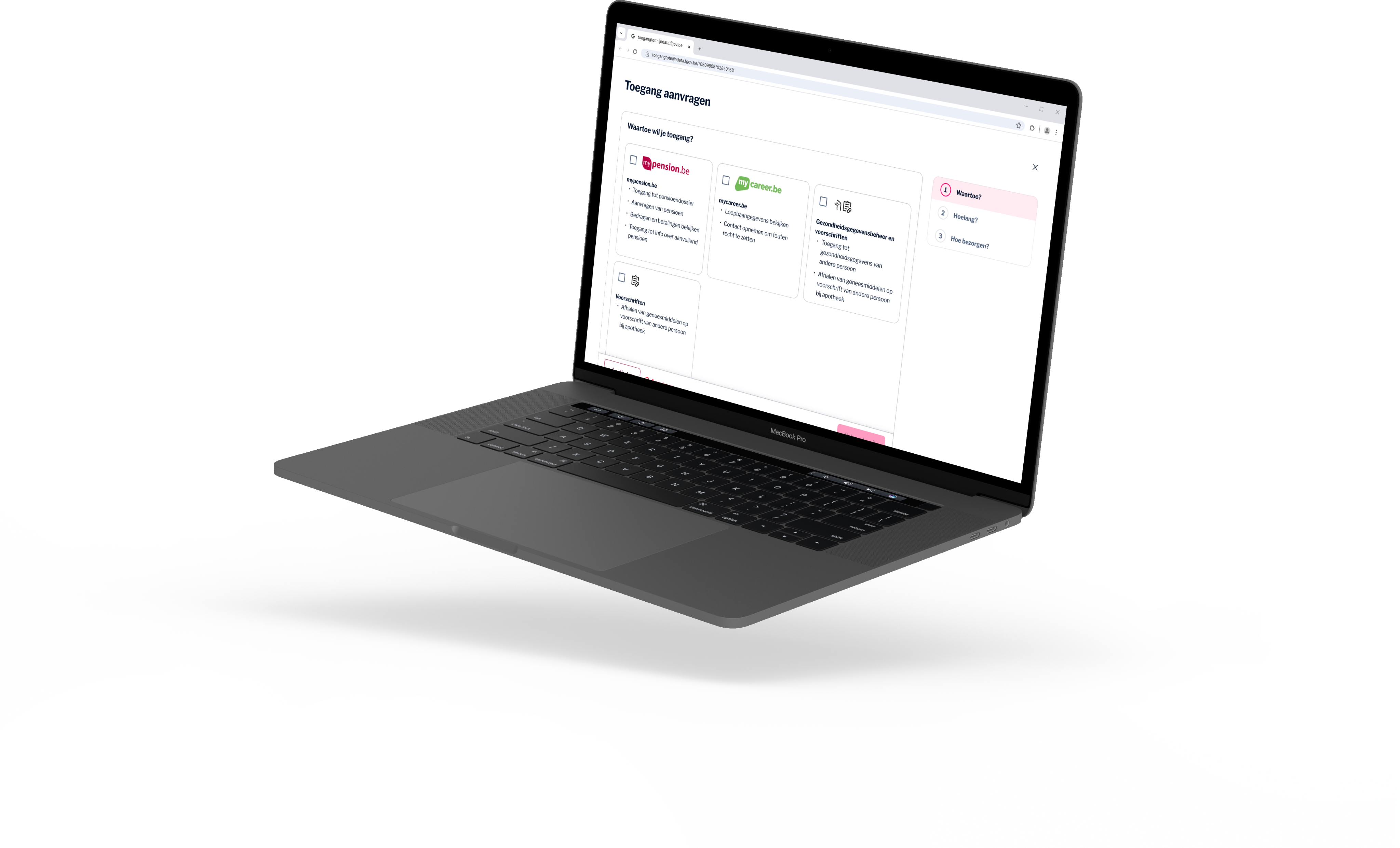
Designing low- and high-fidelity wireframes and accessible user interfaces for the online services Toegang tot mijn data and Burgergegevens raadplegen using the eGov 3.0 Design System.
Presentations & discussing
Presenting concepts to stakeholders, leading discussions, and refining the designs based on feedback throughout the project.
Implementation support
Working closely with functional analysts and developers to ensure the designs could be implemented successfully.



Danny Dhondt
Director identity management at Sigedis
For the Burgermandaten project, Lore took on both the UX and UI design: from mapping out the user journey to creating the visual design within the eGov 3.0 design system. She combines a sharp understanding of the business with the courage to challenge existing assumptions, always guided by the experience of the citizen.
Design outcome
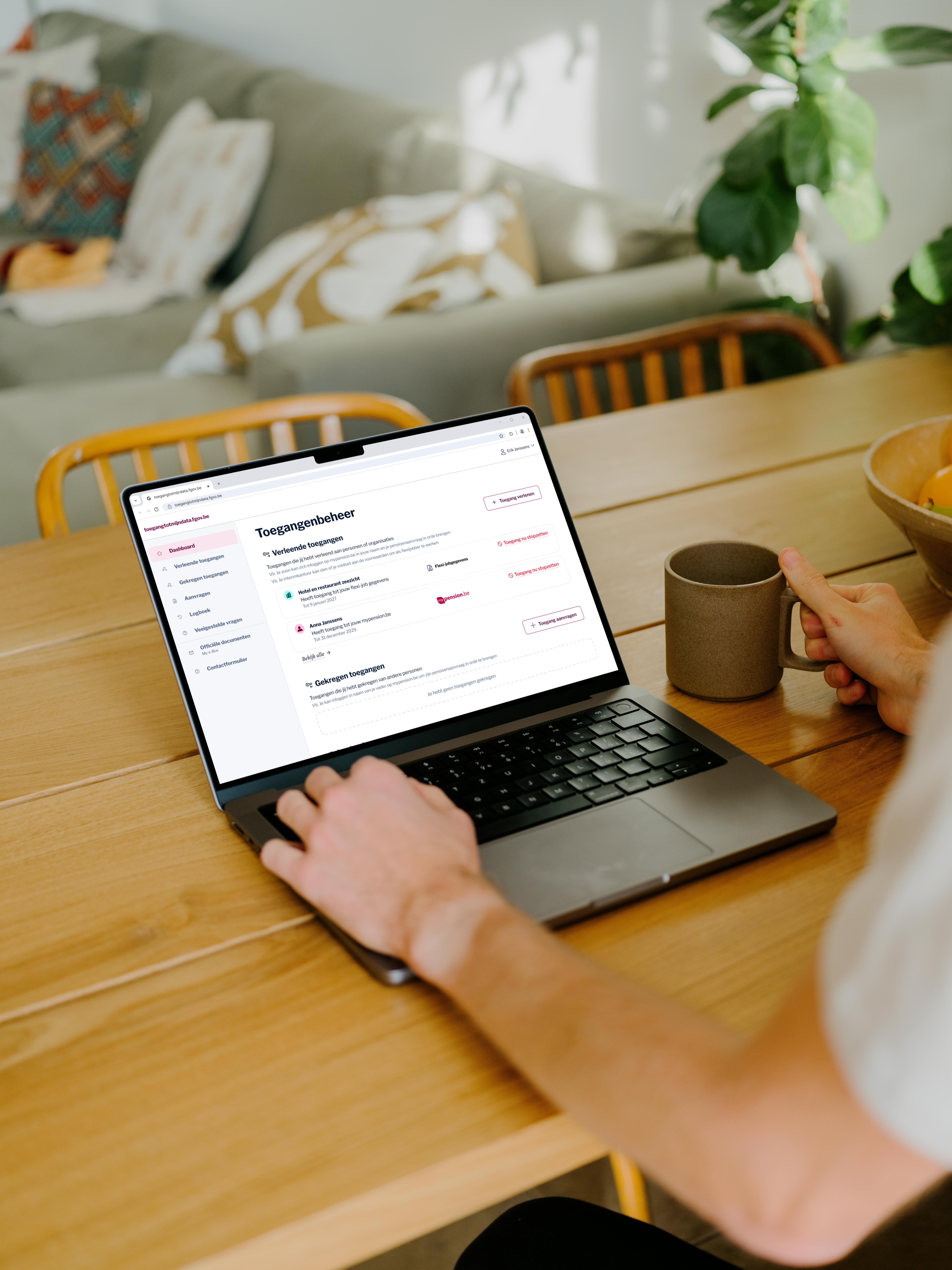
This project resulted in a reusable access management framework that integrates into different online services. At the heart of the framework is the online service Toegang tot mijn data, the central hub where citizens can view and manage all access requests and permissions in one place. Requests may originate from an organisation, another citizen, or a company.
The two examples below show the range of the framework: from a request initiated by an organisation, to a mandate arranged directly between two citizens.
Example 1
Checking flexi-job eligibility
Before hiring someone as a flexi-job worker, employers must verify whether the applicant meets the legal eligibility requirements. Instead of requesting paper documents, employers can can request and view the required data through the online service Burgergevens raadplegen.
Step 1
Employer creates a request
The employer logs in to Burgergegevens raadplegen and creates a request to access the applicant's data. The request is shared via a link or a QR code.
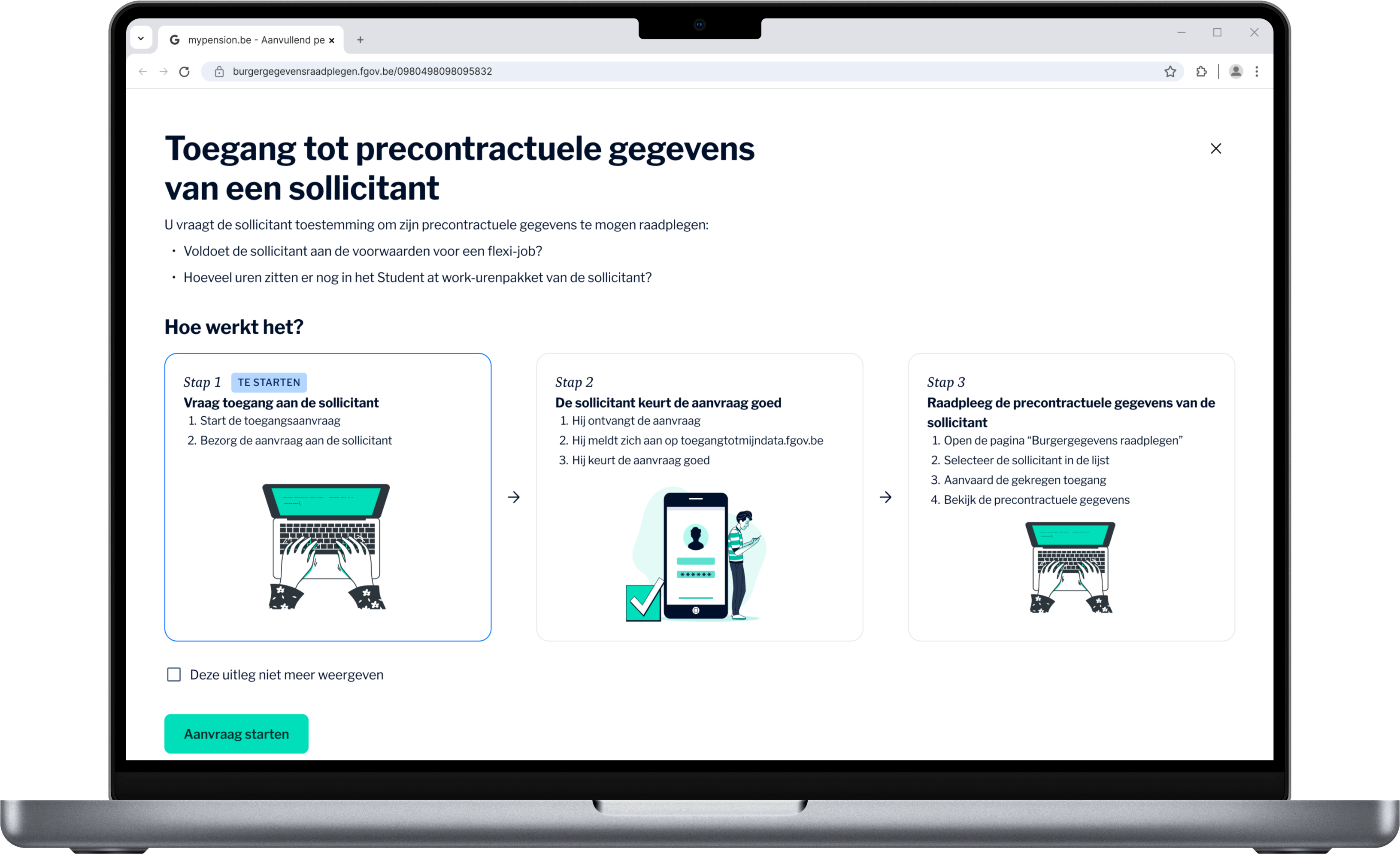
Step 2
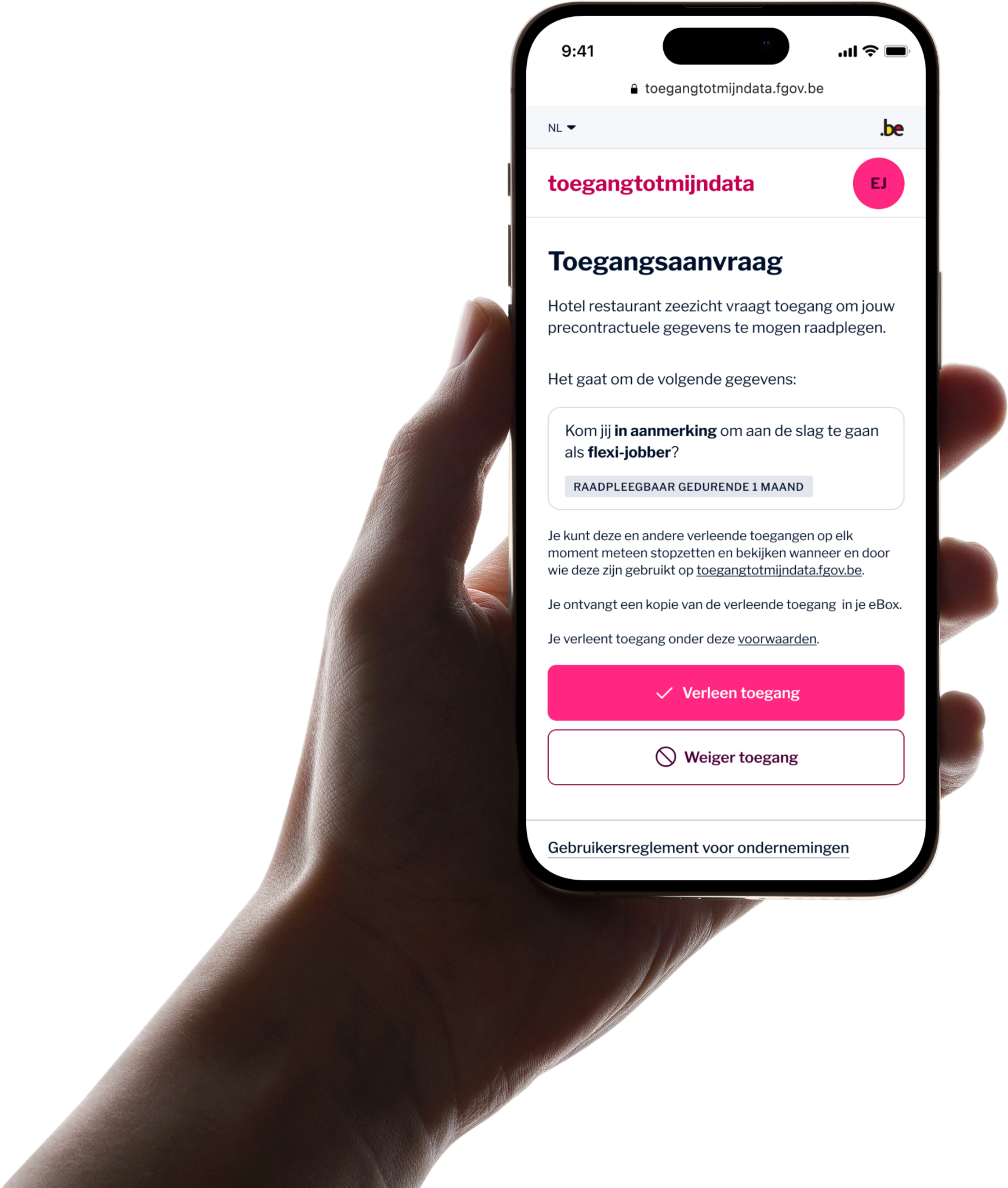
Applicant accepts the request
The applicant opens the link, logs in to Toegang tot mijn data, reviews the details of the request, and accepts.
Step 3
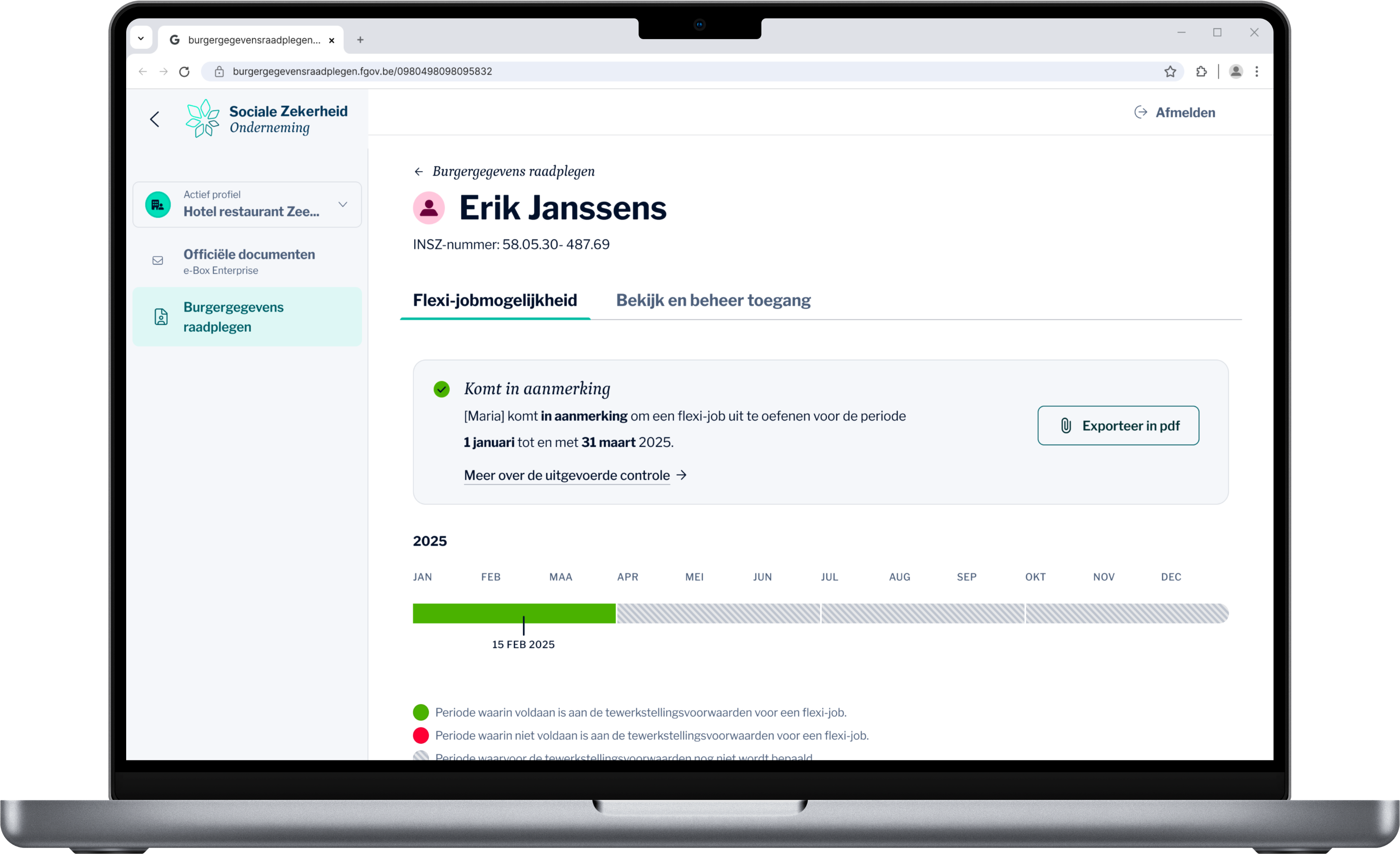
Employer views the applicant's data
The employer opens Burgergegevens raadplegen and can immediately see whether the applicant is allowed to work as a flexi-jobber.
Step 4
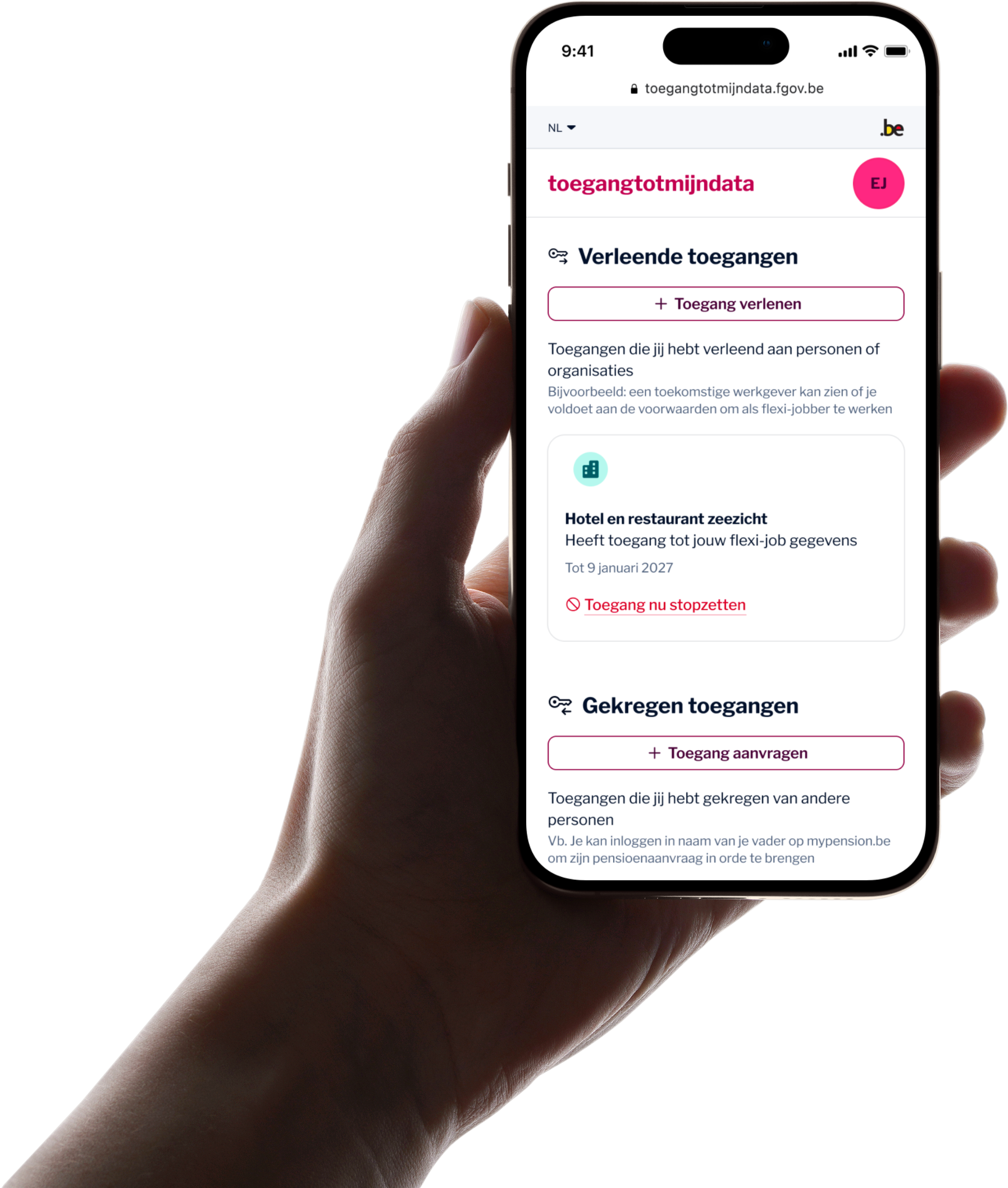
Applicant manages the granted access
The applicant can see the access they've granted in Toegang tot mijn data, and can revoke it at any time.
Scenario 2
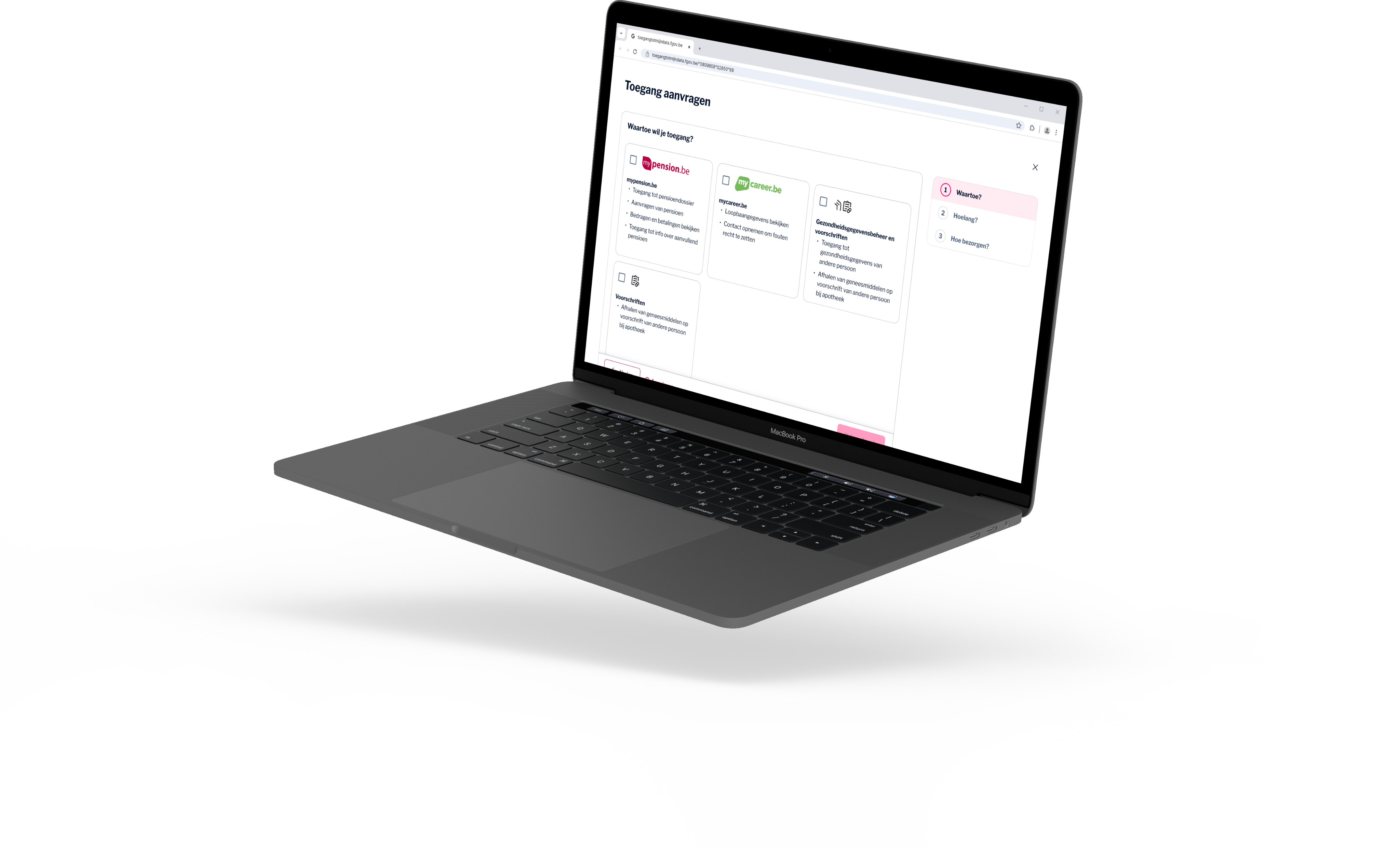
A daughter wants to access mypension.be on behalf of her father
Not everyone is able to request their own pension information online, and may need help from a family member or friend. Through Toegang tot mijn data, a family member or friend can request access on behalf of the other person.
The person who needs help only has to approve the request once. From that moment on, the family member or friend can log in "as" that person to access mypension.be. The person who granted access can revoke it at any time, also via Toegang tot mijn data.
Back to home

Back to home
SIGEDIS
Design of a reusable access management framework
Citizens regularly need to share access to their personal government data with an organisation, a family member, or a company. This project delivered the reusable framework that makes this possible: a secure, consistent way to grant and manage access, that integrates into a wide range of online services while meeting strict privacy, security and legal requirements.
Sociale zekerheid
Burgermandaten
Portfolio Lore De Bleser
My role in the design process
Service design
Defining which applications were needed and how they work together as one coherent framework, for both citizens and professionals.
UX research
Mapping the needs of citizens, professionals and organisations through interviews and market research, to define the right solution.
Customer journey
Mapping the end-to-end journeys for different user groups, to create a simple and consistent experience across multiple online services.
Mockup & UI design
Designing low- and high-fidelity wireframes and accessible user interfaces for the online services Toegang tot mijn data and Burgergegevens raadplegen using the eGov 3.0 Design System.
Presentations & discussing
Presenting concepts to stakeholders, leading discussions, and refining the designs based on feedback throughout the project.
Implementation support
Working closely with functional analysts and developers to ensure the designs could be implemented successfully.

Danny Dhondt
Director identity management at Sigedis
For the Burgermandaten project, Lore took on both the UX and UI design: from mapping out the user journey to creating the visual design within the eGov 3.0 design system. She combines a sharp understanding of the business with the courage to challenge existing assumptions, always guided by the experience of the citizen.
Design outcome
This project resulted in a reusable access management framework that integrates into different online services. At the heart of the framework is the online service Toegang tot mijn data, the central hub where citizens can view and manage all access requests and permissions in one place. Requests may originate from an organisation, another citizen, or a company.
The two examples below show the range of the framework: from a request initiated by an organisation, to a mandate arranged directly between two citizens.
Example 1
Checking flexi-job eligibility
Before hiring someone as a flexi-job worker, employers must verify whether the applicant meets the legal eligibility requirements. Instead of requesting paper documents, employers can can request and view the required data through the online service Burgergevens raadplegen.
Step 1
Employer creates a request
The employer logs in to Burgergegevens raadplegen and creates a request to access the applicant's data. The request is shared via a link or a QR code.
Step 2
Applicant accepts the request
The applicant opens the link, logs in to Toegang tot mijn data, reviews the details of the request, and accepts.
Step 3
Employer views the applicant's data
The employer opens Burgergegevens raadplegen and can immediately see whether the applicant is allowed to work as a flexi-jobber.
Step 4
Applicant manages the granted access
The applicant can see the access they've granted in Toegang tot mijn data, and can revoke it at any time.
Scenario 2
A daughter wants to access mypension.be on behalf of her father
Not everyone is able to request their own pension information online, and may need help from a family member or friend. Through Toegang tot mijn data, a family member or friend can request access on behalf of the other person.
The person who needs help only has to approve the request once. From that moment on, the family member or friend can log in "as" that person to access mypension.be. The person who granted access can revoke it at any time, also via Toegang tot mijn data.
Back to home
Back to home
SIGEDIS
Design of a reusable access management framework
Citizens regularly need to share access to their personal government data with an organisation, a family member, or a company. This project delivered the reusable framework that makes this possible: a secure, consistent way to grant and manage access, that integrates into a wide range of online services while meeting strict privacy, security and legal requirements.
Sociale zekerheid
Burgermandaten
My role in the design process
Service design
Defining which applications were needed and how they work together as one coherent framework, for both citizens and professionals.
UX research
Mapping the needs of citizens, professionals and organisations through interviews and market research, to define the right solution.
Customer journey
Mapping the end-to-end journeys for different user groups, to create a simple and consistent experience across multiple online services.
Mockup & UI design
Designing low- and high-fidelity wireframes and accessible user interfaces for the online services Toegang tot mijn data and Burgergegevens raadplegen using the eGov 3.0 Design System.
Presentations & discussing
Presenting concepts to stakeholders, leading discussions, and refining the designs based on feedback throughout the project.
Implementation support
Working closely with functional analysts and developers to ensure the designs could be implemented successfully.

Danny Dhondt
Director identity management at Sigedis
For the Burgermandaten project, Lore took on both the UX and UI design: from mapping out the user journey to creating the visual design within the eGov 3.0 design system. She combines a sharp understanding of the business with the courage to challenge existing assumptions, always guided by the experience of the citizen.
Design outcome
This project resulted in a reusable access management framework that integrates into different online services. At the heart of the framework is the online service Toegang tot mijn data, the central hub where citizens can view and manage all access requests and permissions in one place. Requests may originate from an organisation, another citizen, or a company.
The two examples below show the range of the framework: from a request initiated by an organisation, to a mandate arranged directly between two citizens.
Example 1
Checking flexi-job eligibility
Before hiring someone as a flexi-job worker, employers must verify whether the applicant meets the legal eligibility requirements. Instead of requesting paper documents, employers can can request and view the required data through the online service Burgergevens raadplegen.
Step 1
Employer creates a request
The employer logs in to Burgergegevens raadplegen and creates a request to access the applicant's data. The request is shared via a link or a QR code.
Step 2
Applicant accepts the request
The applicant opens the link, logs in to Toegang tot mijn data, reviews the details of the request, and accepts.
Step 3
Employer views the applicant's data
The employer opens Burgergegevens raadplegen and can immediately see whether the applicant is allowed to work as a flexi-jobber.
Step 4
Applicant manages the granted access
The applicant can see the access they've granted in Toegang tot mijn data, and can revoke it at any time.
Scenario 2
A daughter wants to access mypension.be on behalf of her father
Not everyone is able to request their own pension information online, and may need help from a family member or friend. Through Toegang tot mijn data, a family member or friend can request access on behalf of the other person.
The person who needs help only has to approve the request once. From that moment on, the family member or friend can log in "as" that person to access mypension.be. The person who granted access can revoke it at any time, also via Toegang tot mijn data.

Back to home